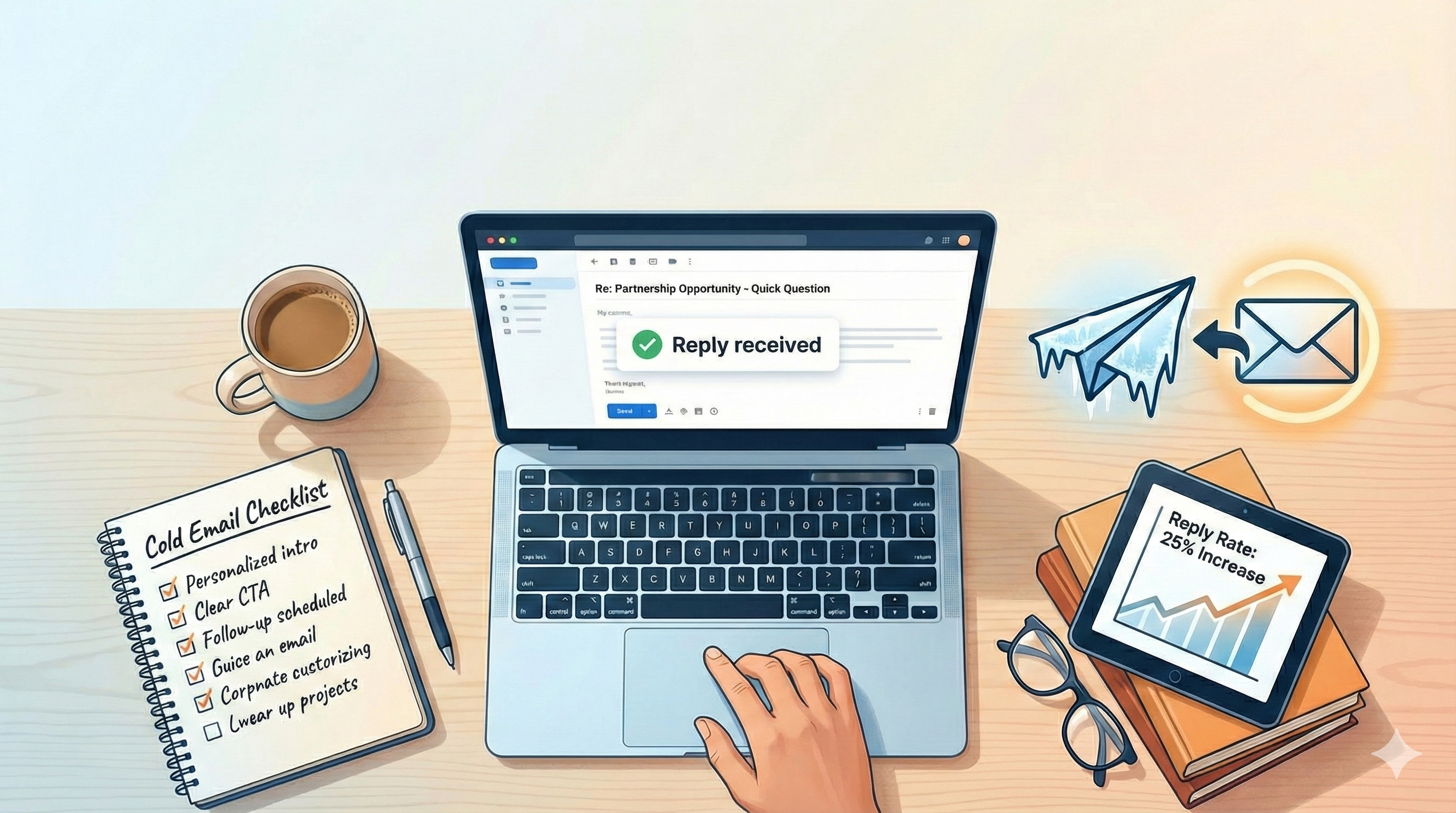
There's a fine line between personalization and stalking. We've all received those emails that make us uncomfortable—the ones that mention your dog's name, your child's school, or that you were at a specific coffee shop last Tuesday. That's not personalization. That's creepy.
True personalization is about showing you understand someone's professional world—their challenges, goals, and context. It's about making a stranger feel like you're already on their team.
In this guide, we'll explore 7 techniques that separate master personalizers from those who just plug {first_name} into a template and call it a day.
The Personalization Spectrum
Before diving into tactics, understand that personalization exists on a spectrum:
- No personalization: Generic templates. "Dear Sir/Madam" energy.
- Surface personalization: First name, company name. Better, but obvious.
- Contextual personalization: Referencing recent news, role, or company stage.
- Deep personalization: Understanding their specific challenges and speaking to them directly.
Most people stop at level 2 and wonder why their emails don't get replies. The magic happens at levels 3 and 4—but you need to do it without crossing into "I've been watching you" territory.
Good personalization answers the question: "Why are you reaching out to ME, specifically, at THIS moment?" If your email could be sent to anyone at any time, it's not personalized enough.
Technique #1: The "Just Noticed" Hook
Start with something you genuinely just noticed about their company or role. This creates urgency and shows you're paying attention now, not six months ago.
Hi Sarah,
I'm reaching out because your company is growing fast...
Hi Sarah,
Just saw you're hiring 3 new SDRs—congrats on the expansion! That usually means outbound is about to scale fast...
Where to find "just noticed" moments:
- LinkedIn: Job postings, promotions, company updates
- Press releases: Funding rounds, product launches, partnerships
- Their website: New features, blog posts, case studies
- Social media: Posts, comments, shared content
Technique #2: The "Your Content Spoke to Me" Approach
If your prospect creates content—blog posts, LinkedIn articles, podcast appearances—you have a goldmine. Reference something specific they said and connect it to why you're reaching out.
"Listened to your episode on the SaaS Growth Show about building outbound from scratch. Your point about 'quality over quantity' really resonated—especially the part about spending 80% of time on research and 20% on sending."
This works because:
- It shows you genuinely consumed their content (flattering, but professional)
- It positions you as someone who shares their values
- It gives you a natural segue into your pitch
Warning: Only do this if you actually engaged with the content. Fake references are easy to spot and instantly destroy trust.
Technique #3: The Mutual Connection Reference
Warm introductions outperform cold emails by 10x. But even without a formal intro, you can create warmth by referencing shared connections or communities.
Subject: saw you know [mutual connection]

Hi Alex,

I noticed we're both connected to Maria from TechCorp—
we worked together on a project last year and I've
been impressed by the work she's doing.

She mentioned your team is scaling outreach. If you're
open to it, I'd love to share how we helped [similar company]
triple their reply rates...
You can reference:
- LinkedIn mutual connections
- Shared Slack communities or forums
- Same conferences or events attended
- Same investors or advisors
Technique #4: The "I Understand Your World" Email
Instead of talking about yourself, demonstrate that you understand their specific situation. This requires researching their industry, role, and company stage.
For a Head of Sales at a Series A startup:
"Series A is a weird stage for sales—you finally have budget for tools but not enough reps to justify enterprise pricing. Meanwhile, the board wants to see 3x growth and you're still figuring out the ICP."
This type of email makes the reader think: "This person gets it."
To write these, you need to:
- Study the common challenges of their role and industry
- Understand their company stage and what that typically means
- Research their specific company context (tech stack, competitors, etc.)
Read job postings for the role you're targeting. They often list the exact challenges and responsibilities you can reference in your emails. "I saw you're looking for someone to build out the sales tech stack—curious if you've thought about..."
Technique #5: The Compliment That Isn't Sycophantic
People love compliments, but they hate obvious flattery. The key is to compliment something specific and non-obvious.
"I love your company! You guys are doing amazing work!"
"Your product page does something clever—using customer quotes as section headers instead of generic feature descriptions. Made me want to steal the idea for our own site."
Good compliments are:
- Specific: About a particular decision, not the whole company
- Observational: Something you noticed, not something everyone says
- Professional: About their work, not them personally
Technique #6: The Challenge-Aware Opener
Skip the small talk and jump straight into a challenge you know they're facing. This shows you've done your homework and gets to the point fast.
Subject: hiring SDRs at [company name]

Hi Jordan,

Hiring 5 SDRs in 90 days while maintaining quality is
one of the hardest things in sales leadership. You're
probably juggling interviews, onboarding, and still
trying to hit Q4 numbers.

One thing that's helped similar teams: [your solution]...
This works because:
- You're acknowledging their reality, not your agenda
- You're showing empathy for their situation
- You're positioning yourself as someone who solves their specific problem
Technique #7: The "Research-Powered" Observation
This is where deep personalization shines. You make an observation about their business that demonstrates genuine understanding—not just surface-level research.
For example, after analyzing a prospect's website:
"I noticed your pricing page emphasizes 'no per-seat pricing'—smart move given how frustrated enterprise buyers are with escalating SaaS costs. But your homepage still leads with features instead of that value prop. Curious if that's intentional or something you're testing."
This type of personalization:
- Shows you actually looked at their site (not just the homepage)
- Demonstrates strategic thinking
- Opens a conversation about their business decisions
- Positions you as someone with valuable insights
Researching every prospect manually isn't scalable. Tools like WarmLeads analyze websites automatically and generate personalized observations you can use as hooks. What used to take 20 minutes now takes 20 seconds.
Putting It Together: A Complete Example
Let's combine these techniques into a full email:
Subject: that pricing page tweak

Hi Morgan,

Just noticed you added that "guaranteed ROI" calculator
to your pricing page—smart addition. Most B2B SaaS
companies bury that stuff in case studies.

I'm curious: are you finding that enterprise buyers
are actually using it? We've seen similar tools work
really well for companies selling to procurement-heavy
orgs like the ones you're targeting.

If you're trying to increase demo requests from that
page, I have a few ideas based on what worked for
[similar company]. Happy to share if useful.

Either way, nice work on the calculator.

Best,
Jamie
This email:
- Uses a specific observation (the ROI calculator)
- Asks a thoughtful question
- Offers value without being salesy
- Ends with a genuine compliment
- Has a low-friction call-to-action
The Line Between Personal and Creepy
Here's a quick guide to what's okay and what's not:
✅ Okay to reference:
- Public company news and announcements
- Their published content (blogs, podcasts, LinkedIn)
- Job postings and hiring signals
- Product features and website changes
- Professional achievements and promotions
❌ Avoid referencing:
- Personal family details
- Private social media posts
- Physical location or movements
- Political or religious views
- Health information
The rule of thumb: If it's something they shared in a professional context, it's fair game. If you had to dig deep into their personal life to find it, leave it out.
Final Thoughts
Personalization isn't about showing off how much you know about someone. It's about demonstrating that you understand their world and have something genuinely valuable to offer.
The best personalized emails feel like the start of a conversation with a smart colleague—not a pitch from a stranger with a LinkedIn Premium account.
Start with one technique from this guide and practice it until it becomes natural. Then add another. Before long, you'll be writing emails that feel human, get replies, and build real relationships.
Ready to personalize at scale? Join the WarmLeads waitlist and turn any website into a personalized cold email in seconds.